You Can’t Manage Time. You Can Only Manage Yourself.
If there’s one thing I’ve learned over the years, it’s this:
You can’t manage time.
Time doesn’t care what you’re doing. It carried on before you were born, and it’ll carry on long after you’re gone. Every single one of us gets the same 24 hours every day.
So the real question isn’t, “How do I manage my time?”
It’s “How do I manage myself?”
Once you understand that, everything changes.
Stop Trying to Do Everything
As business owners, it’s easy to feel overwhelmed. There are clients to speak to, emails to answer, staff to support, paperwork to complete, marketing to do and a hundred other jobs competing for your attention.
The problem isn’t usually a lack of time.
It’s that everything feels equally important.
The first step is deciding what actually deserves your attention.
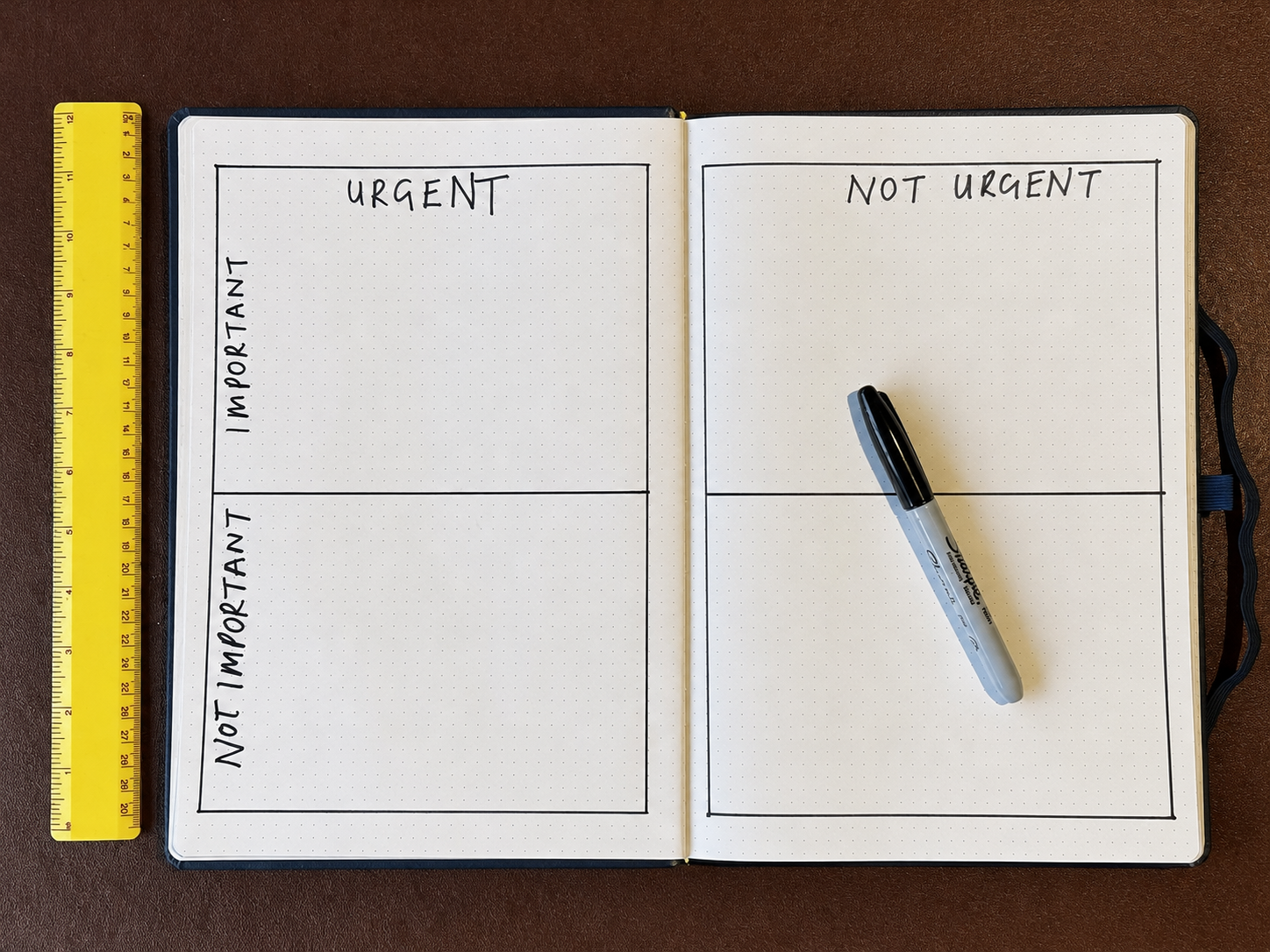
The Covey Matrix
One of the best tools I’ve ever come across is Stephen Covey’s Urgent/Important Matrix. I come back to it time and time again.
I like to think of it like this:
A – Important and Urgent
These are the jobs that need doing now.
Client deadlines.
A payroll that has to be submitted.
A major problem that needs solving.
This is your firefighting zone. Sometimes you have to be here, but you don’t want to live here because it’s stressful and exhausting.
B – Important but Not Urgent
This is where the magic happens.
Planning.
Building systems.
Learning new skills.
Looking after your health.
Spending time with your family.
Improving your business instead of simply reacting to it.
These jobs don’t usually shout for your attention, but they’re the ones that make the biggest difference over the long term.
The more time you spend here, the less firefighting you’ll have to do later.
D – Urgent but Not Important
These are often someone else’s priorities rather than yours.
If someone else can do the job, delegate it.
Every minute you spend doing work that somebody else could do is a minute you’re not spending on the work only you can do.
E – Not Important and Not Urgent
Simply eliminate it.
Not everything deserves your attention.
Sometimes the best productivity tool is saying, “I’m not going to do that.”
Get It Out of Your Head
Our brains are brilliant at solving problems.
They’re terrible at storing dozens of tasks.
Write everything down.
Don’t try to remember it all.
Once you’ve got a complete list, categorise each task.
- Eliminate the E’s.
- Delegate the D’s.
- Deal with the urgent A’s.
- Schedule the important B’s.
You’ll feel calmer almost immediately because your brain no longer has to carry everything around.
Put the Big Rocks in First
Once you’ve decided what matters, put those things into your calendar first.
Sleep.
Family.
Exercise.
Holidays.
These aren’t rewards for working hard.
They’re the foundation that allows you to do your best work.
Then schedule your work around them.
Not the other way round.
Time Block Your Diary
A task without a place in your diary is often just a wish.
Estimate how long each important task will take and give it a home in your calendar.
If you need two hours to prepare a proposal, block out two hours.
If you need an hour to review your accounts, book the hour.
Protect that time just as you would a meeting with an important client.
Because it is.
Work With Your Energy
Not every hour of the day is equal.
Most of us have times when we’re sharper and more focused.
Use those periods for your most important work.
Save admin, emails and routine jobs for the times when your energy naturally drops.
Managing your energy is just as important as managing your diary.
Build a Default Week
One thing that’s helped me enormously is having a default diary.
For example, my first hour each morning is blocked out for checking emails, replying to clients, speaking with the team and getting organised for the day.
After that comes focused work on my most important task.
Lunch is blocked out.
Meetings have their place.
Friday afternoons are for reviewing the week and planning the next one.
Having a rhythm means I spend less time deciding what to do and more time actually doing it.
Leave White Space
This is the mistake I see people make most often.
They fill every minute of every day.
Then one unexpected phone call, one urgent client or one delayed meeting throws the entire week into chaos.
Leave some breathing room.
White space isn’t wasted time.
It’s flexibility.
It’s thinking time.
It’s recovery time.
And it’s often where your best ideas appear.
Final Thoughts
Time management isn’t really about managing time.
It’s about making good decisions.
Deciding what’s important.
Protecting time for the things that matter.
Having the discipline to follow your plan.
You’ll never get more than 24 hours in a day.
But you can become much better at how you use them.
And in my experience, that’s what separates busy business owners from successful ones.